
Joukovsky Tower
1. Concept and general description
The Joukovsky Tower is an optical communications tower (Optical Tower) of 270 m. Its main characteristic is that the reinforced concrete shaft is faired with aerodynamic profiles that automatically align with the prevailing wind and reduce the friction coefficient of the structure. The first idea corresponds to some drawings I made in 1998. The tower is named in honour of the Russian scientist, mathematician, and engineer Nikolai Yegorovich Zhukovsky (in Russian Николай Егорович Жуковский), considered the father of modern hydrodynamics and aerodynamics.
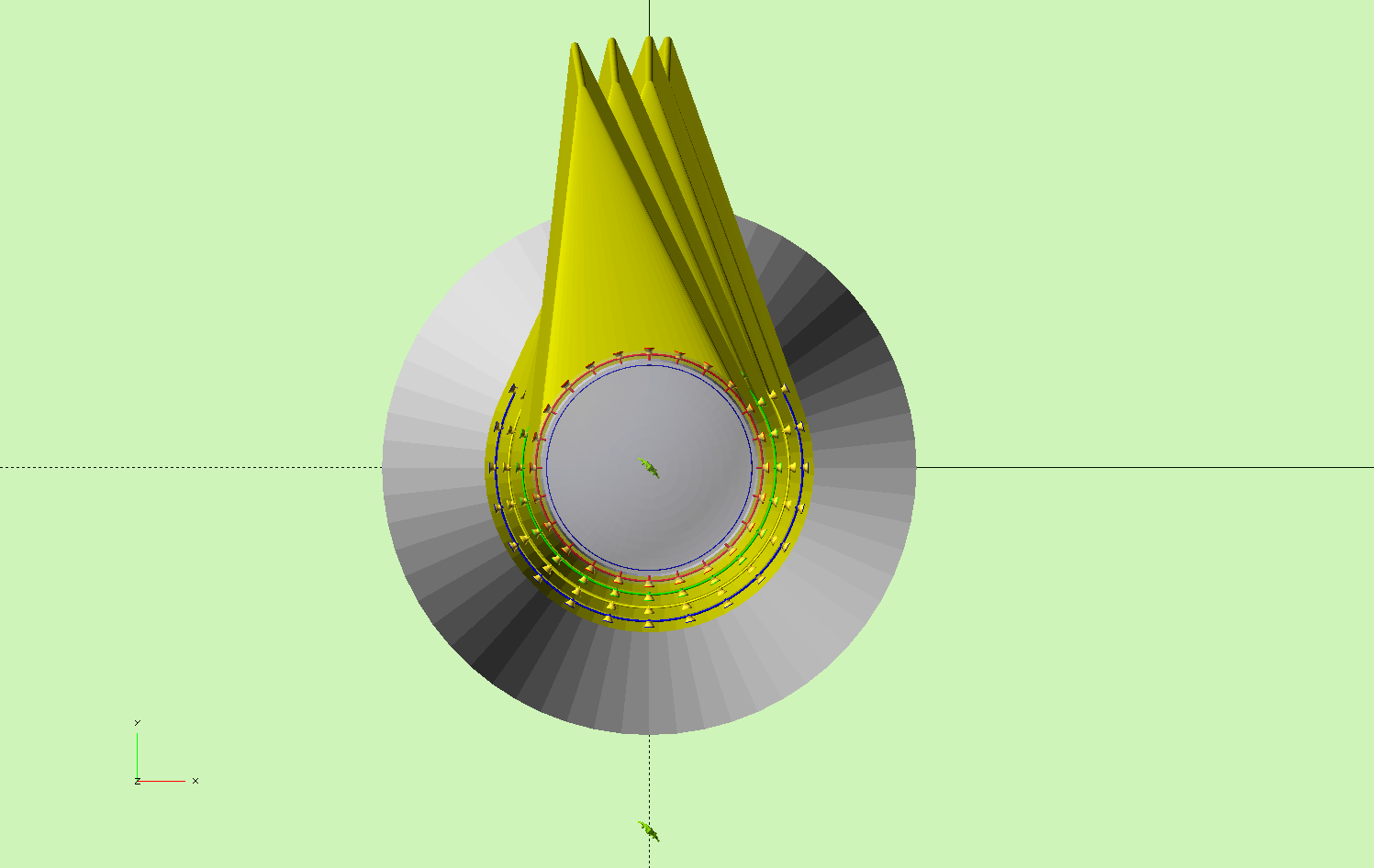
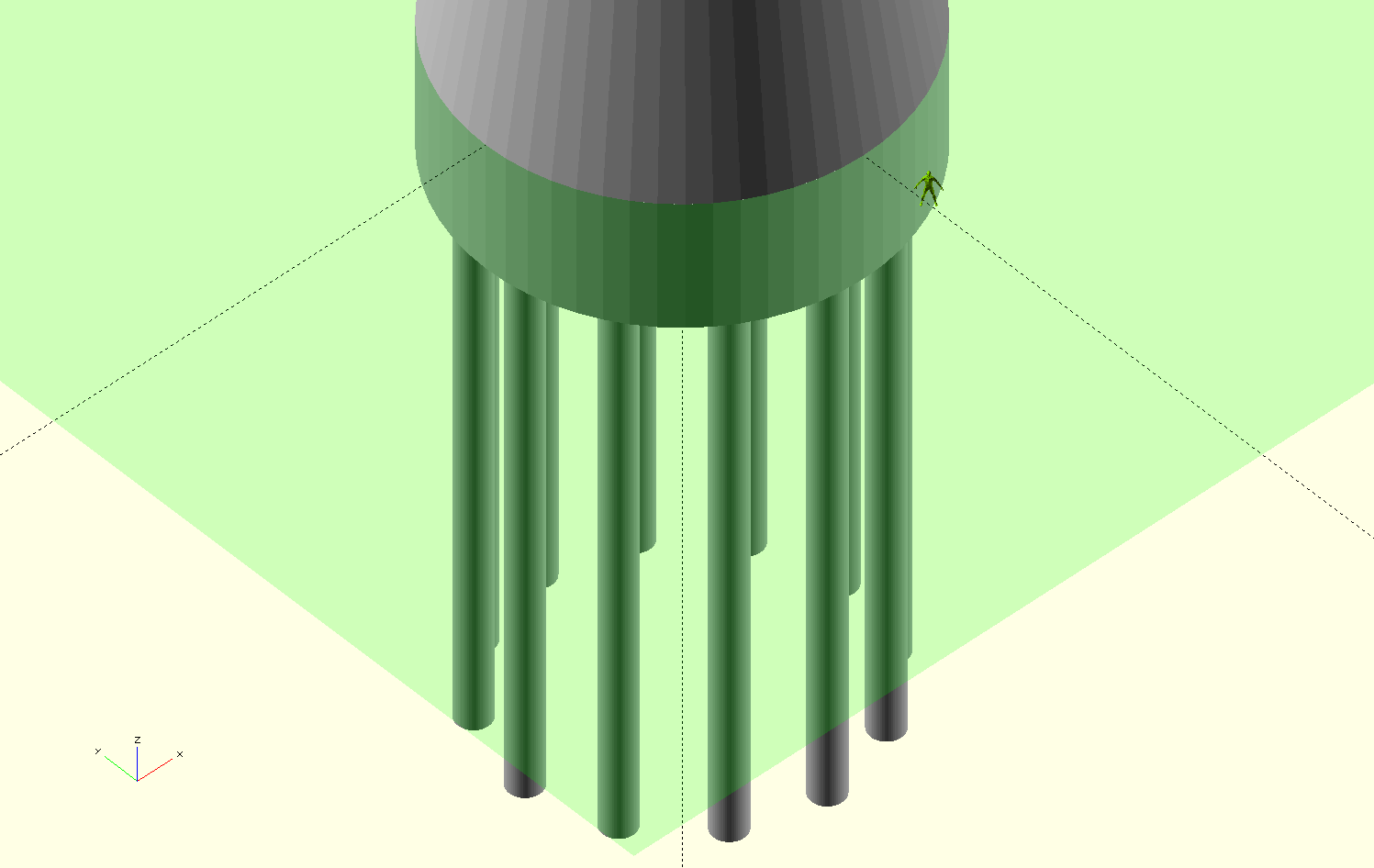
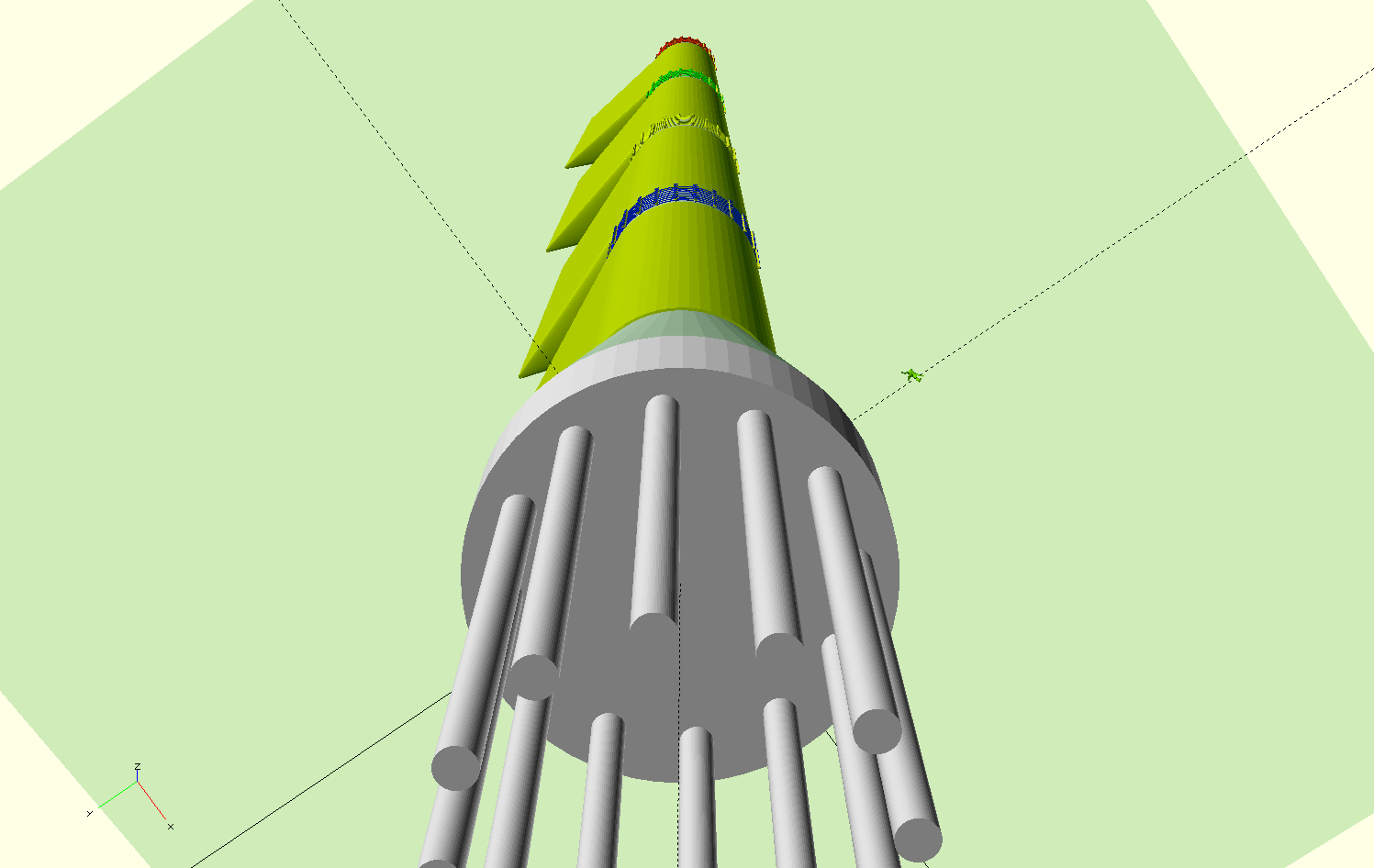
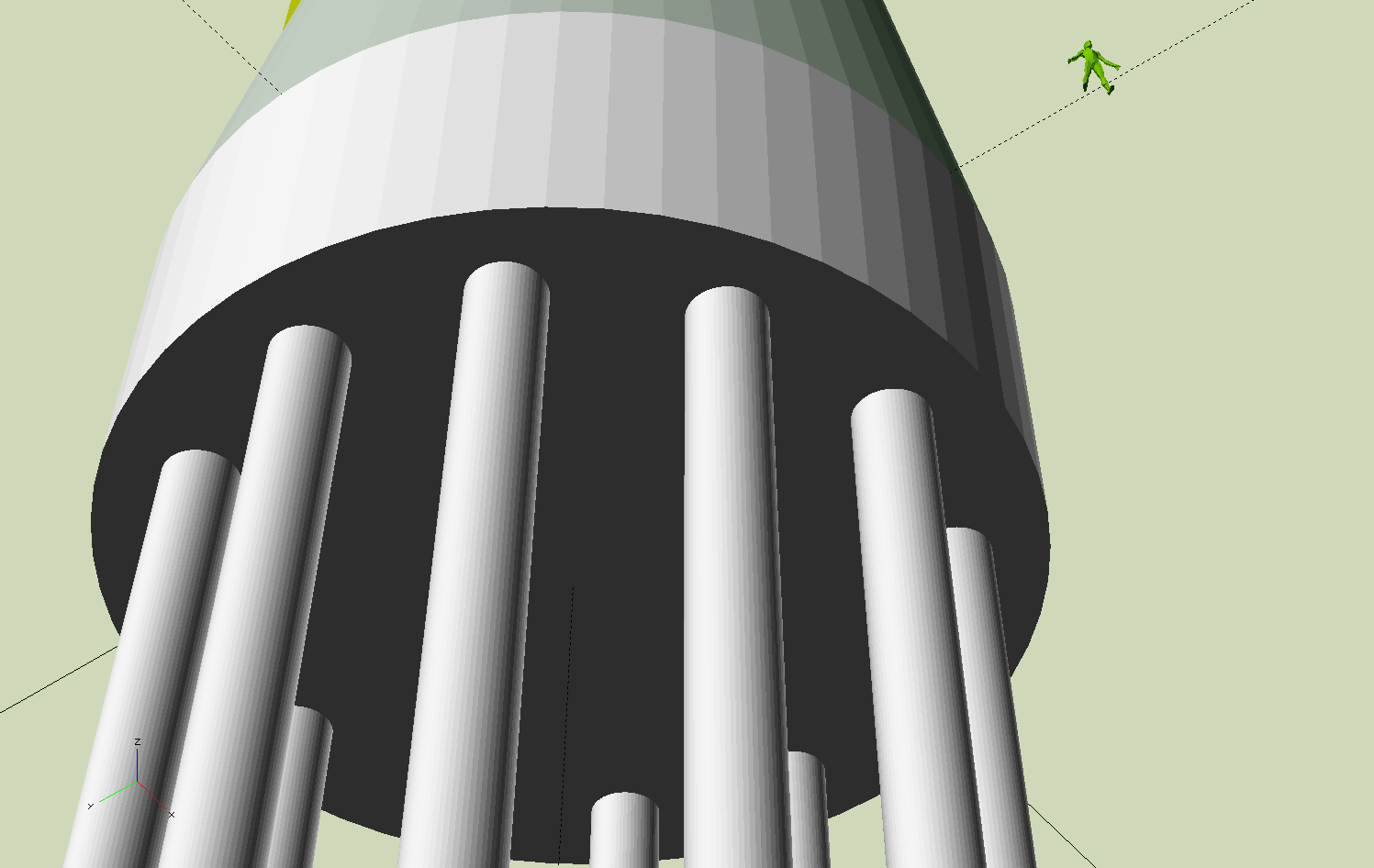
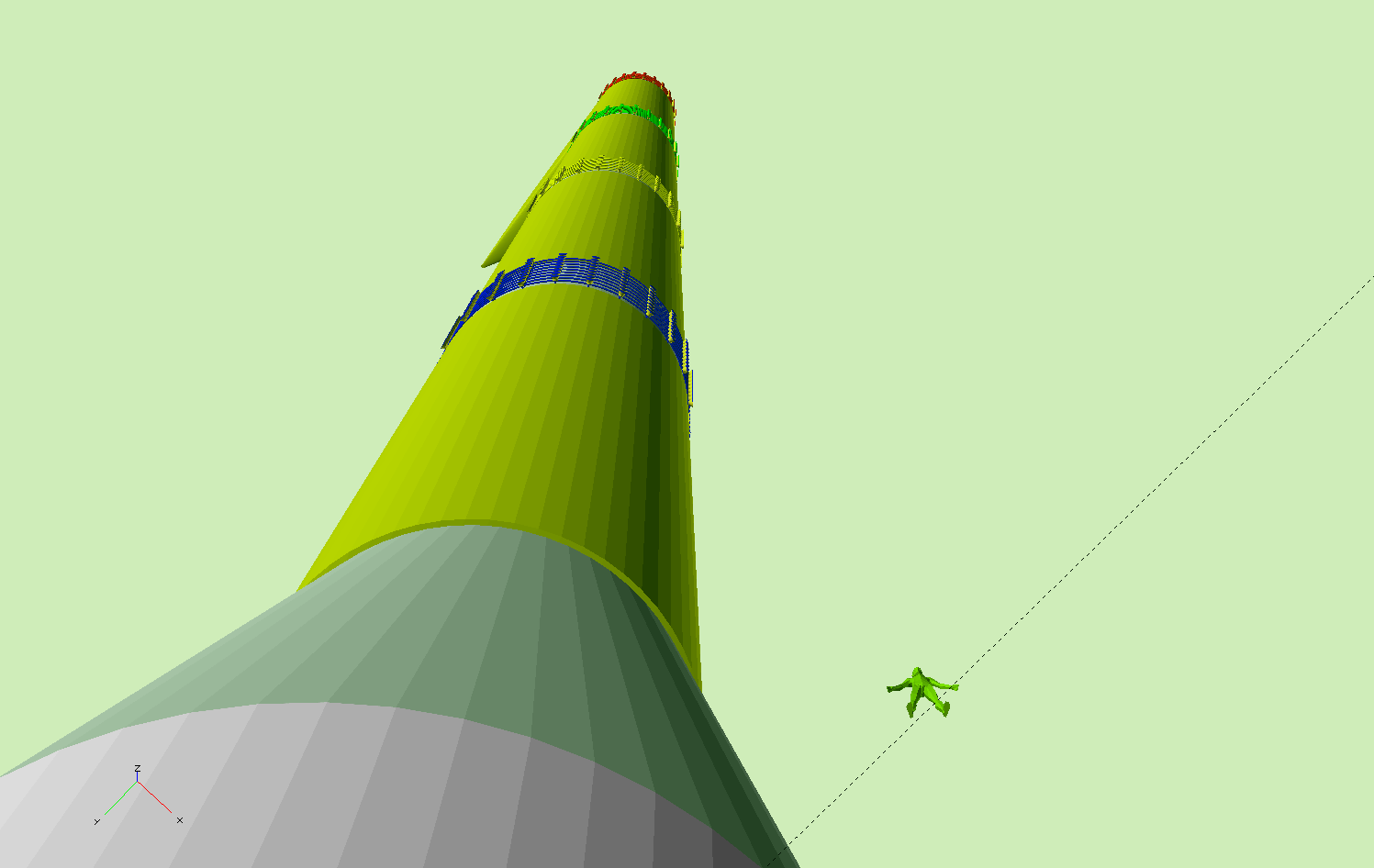
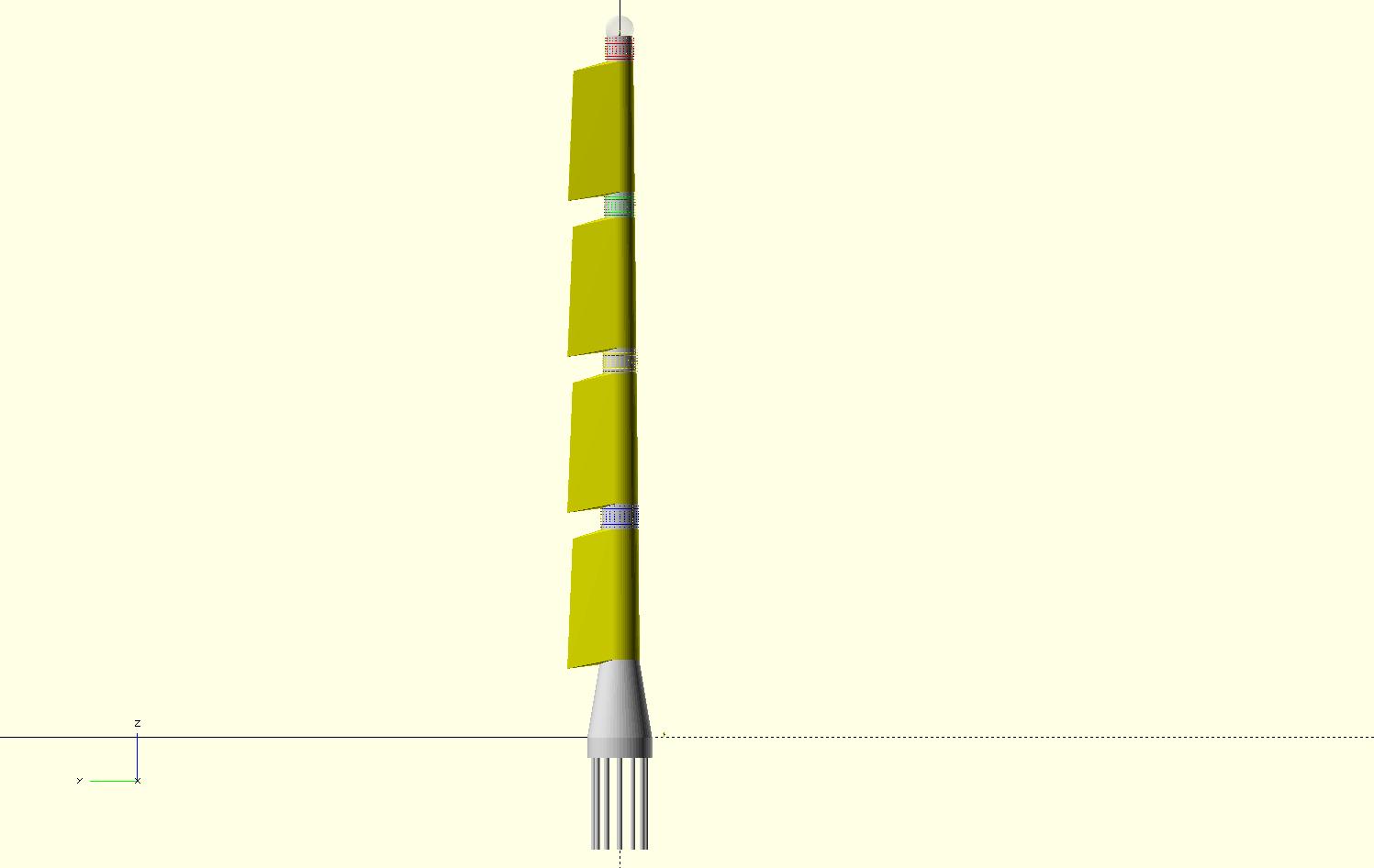
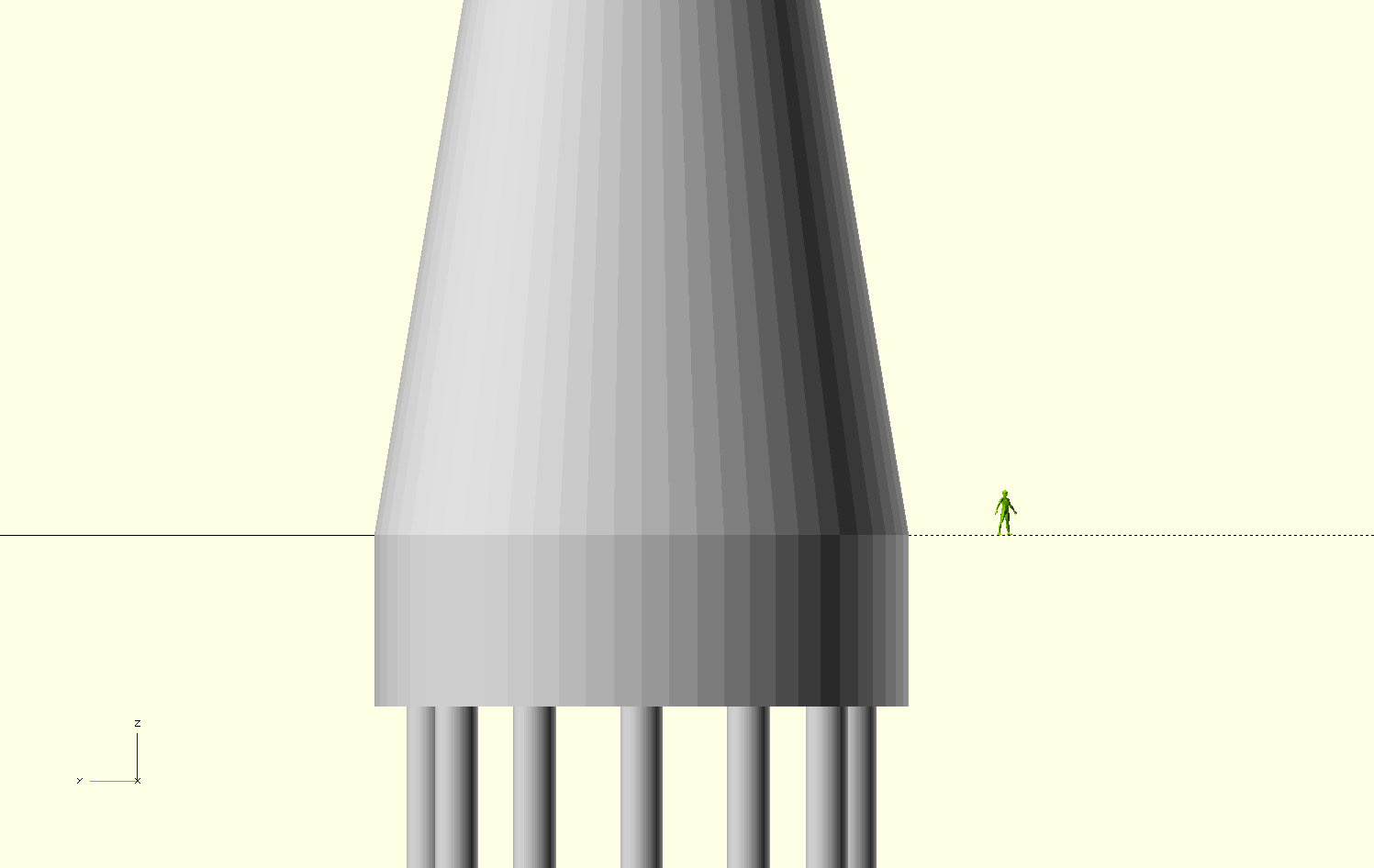
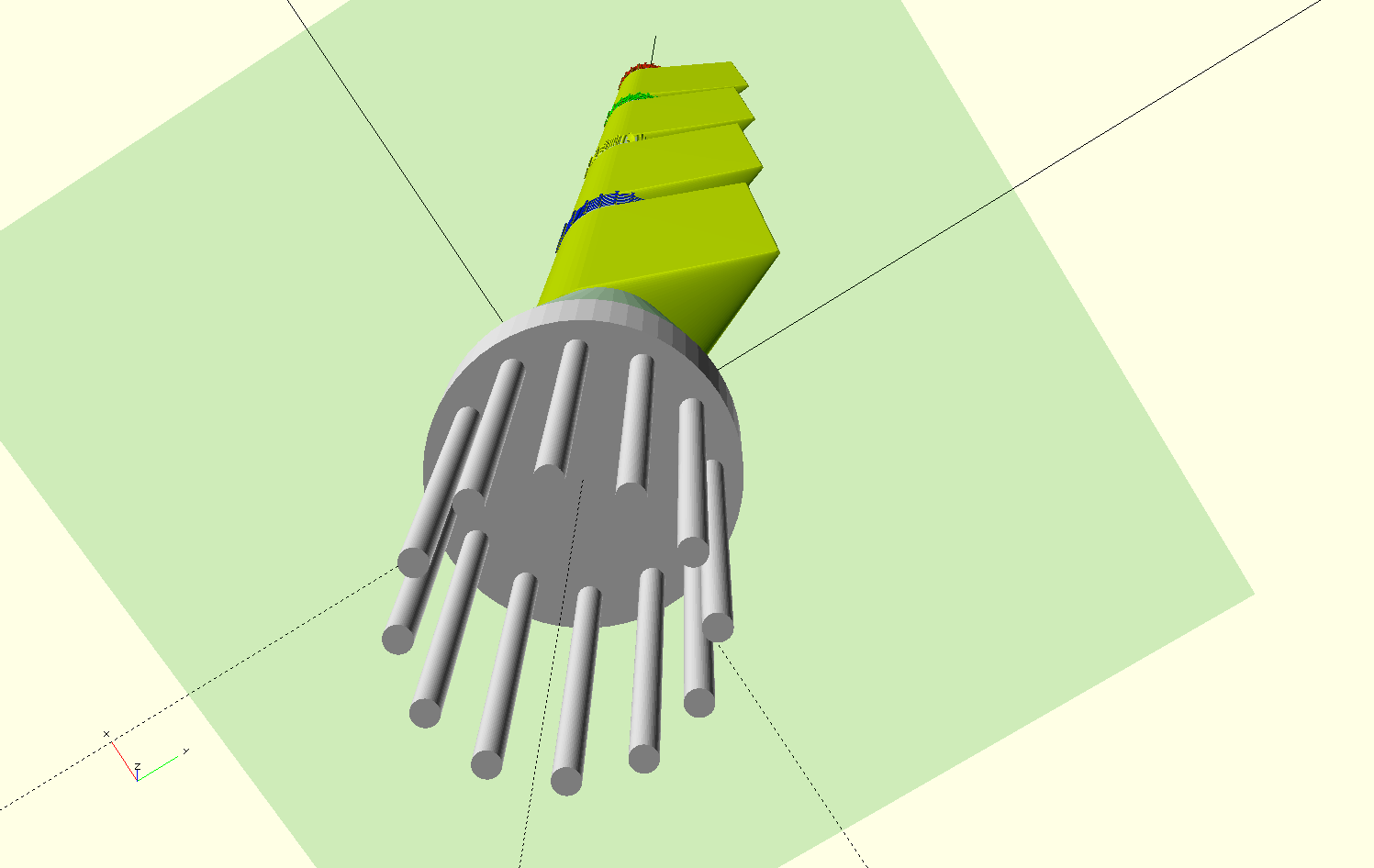
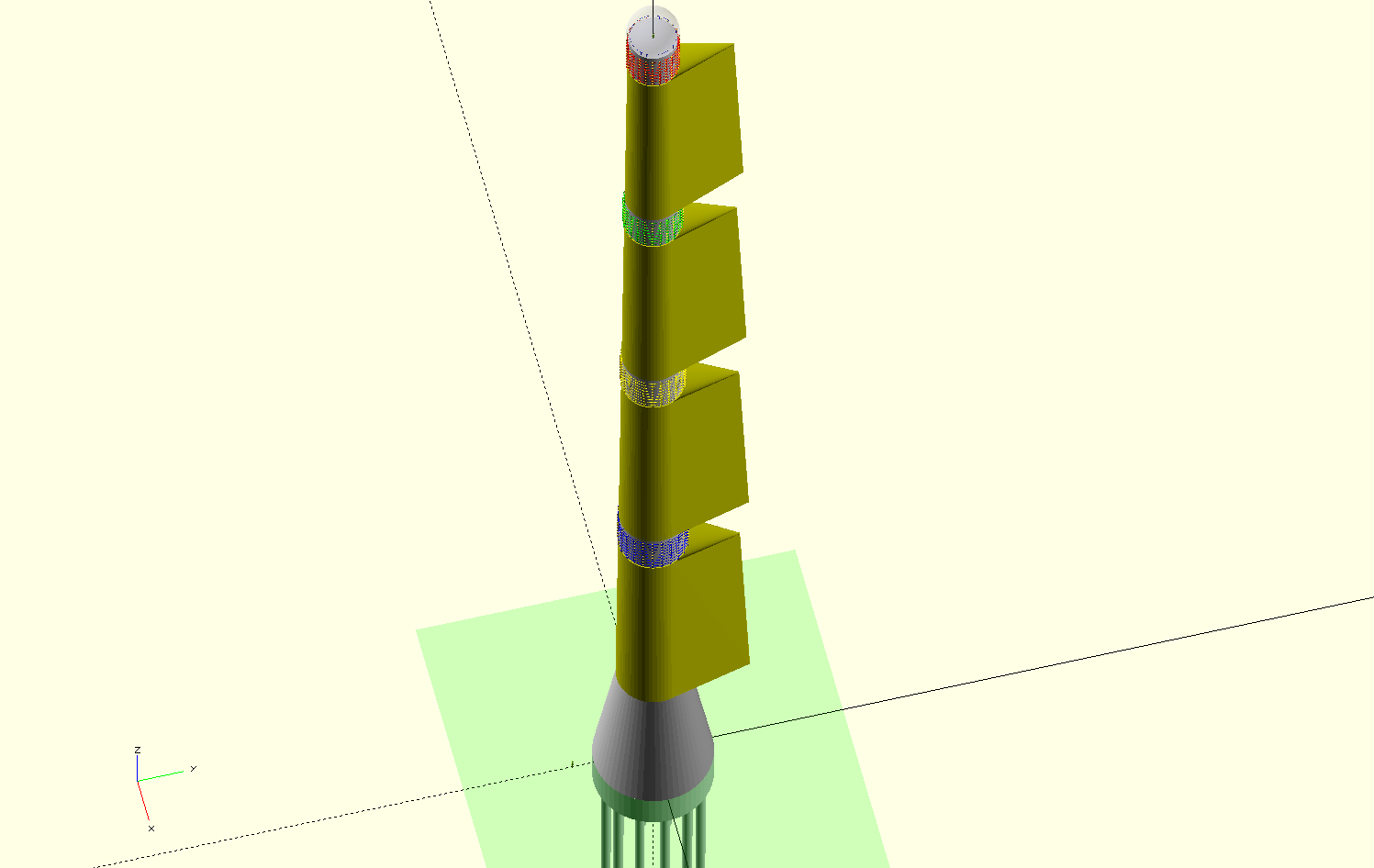
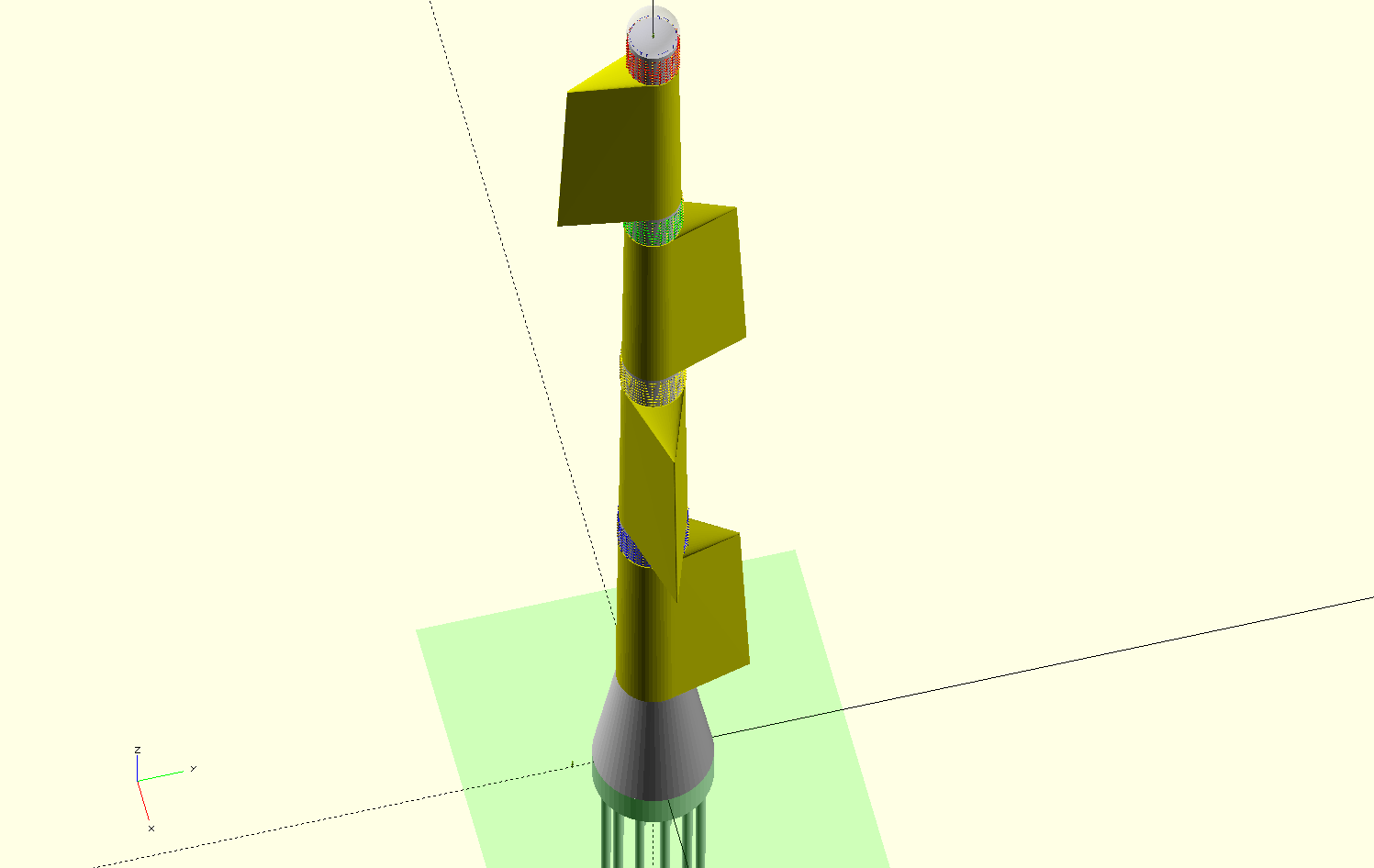
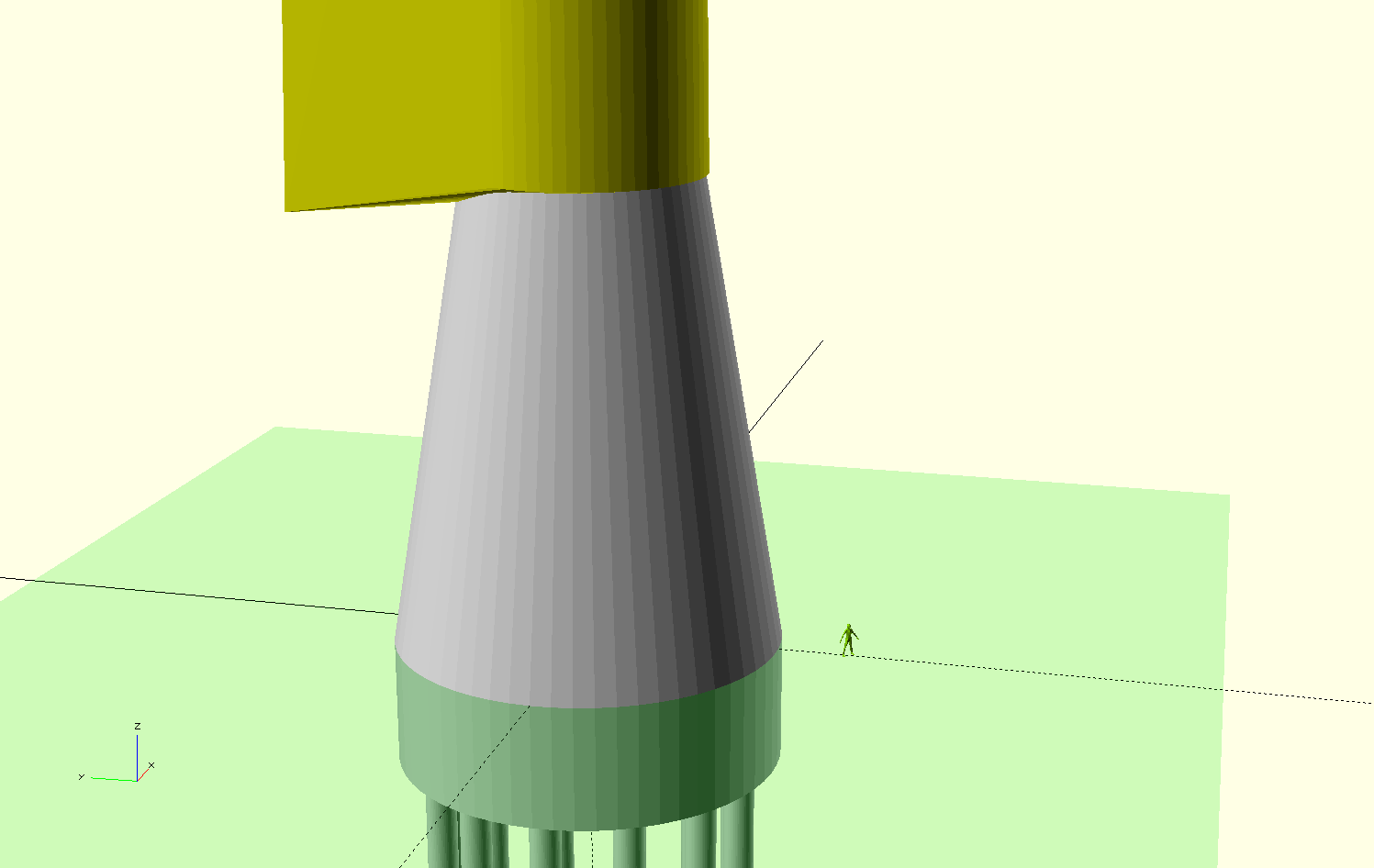
The proposed tower consists of a reinforced concrete shaft with two truncated conical bodies of annular cross‑section. The first body has an external diameter at the base of 25 m, which progressively decreases to 15 m at 30 m height. From there, the second truncated conical body continues, linearly reducing the diameter to 10 m at elevation +270 m above the base. The foundation slab is 8 m thick and is embedded in the ground with 12 piles of 2 m diameter and 35 m depth (foundation dimensions will be adjusted to the actual terrain according to the results of the geotechnical study).
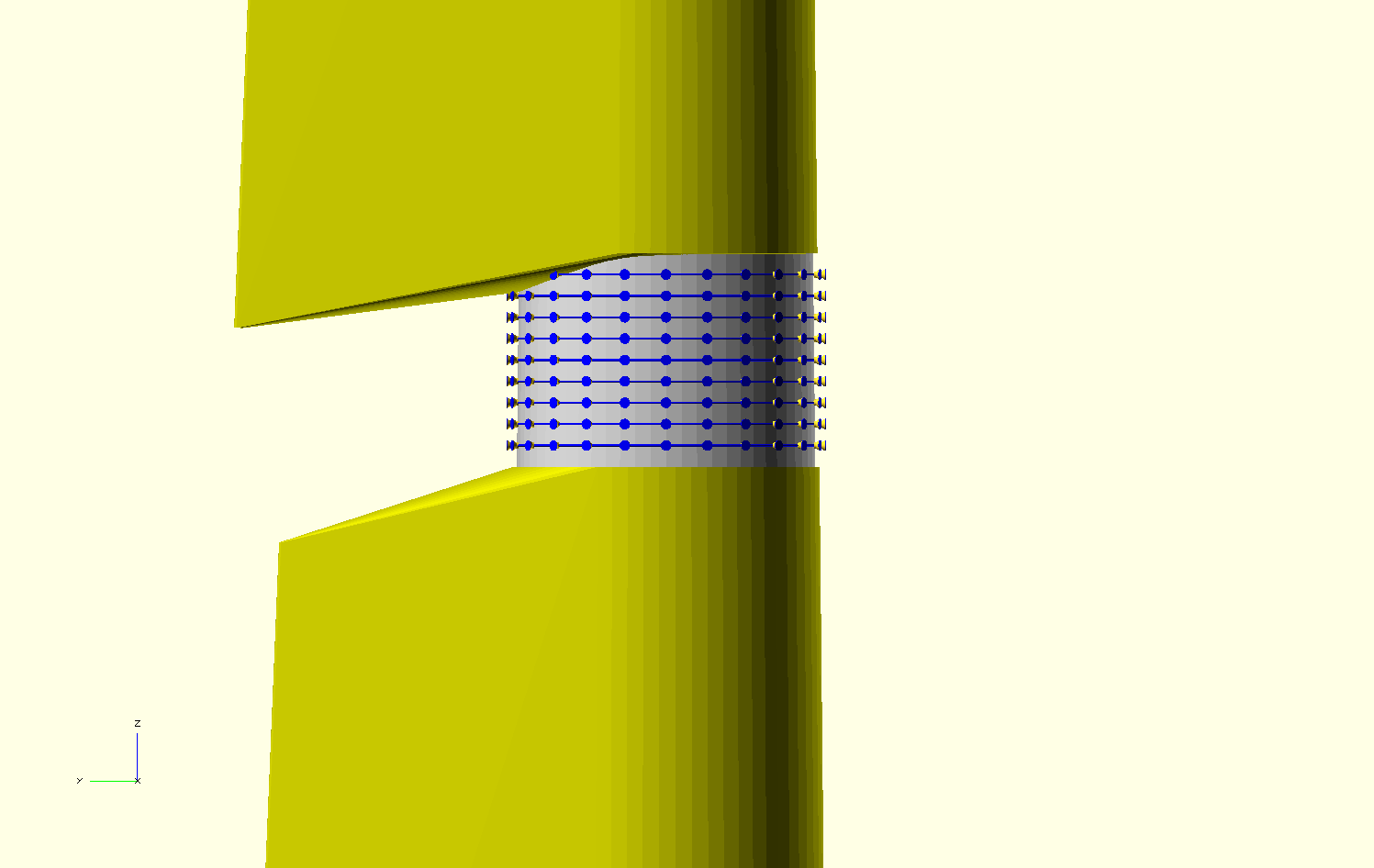
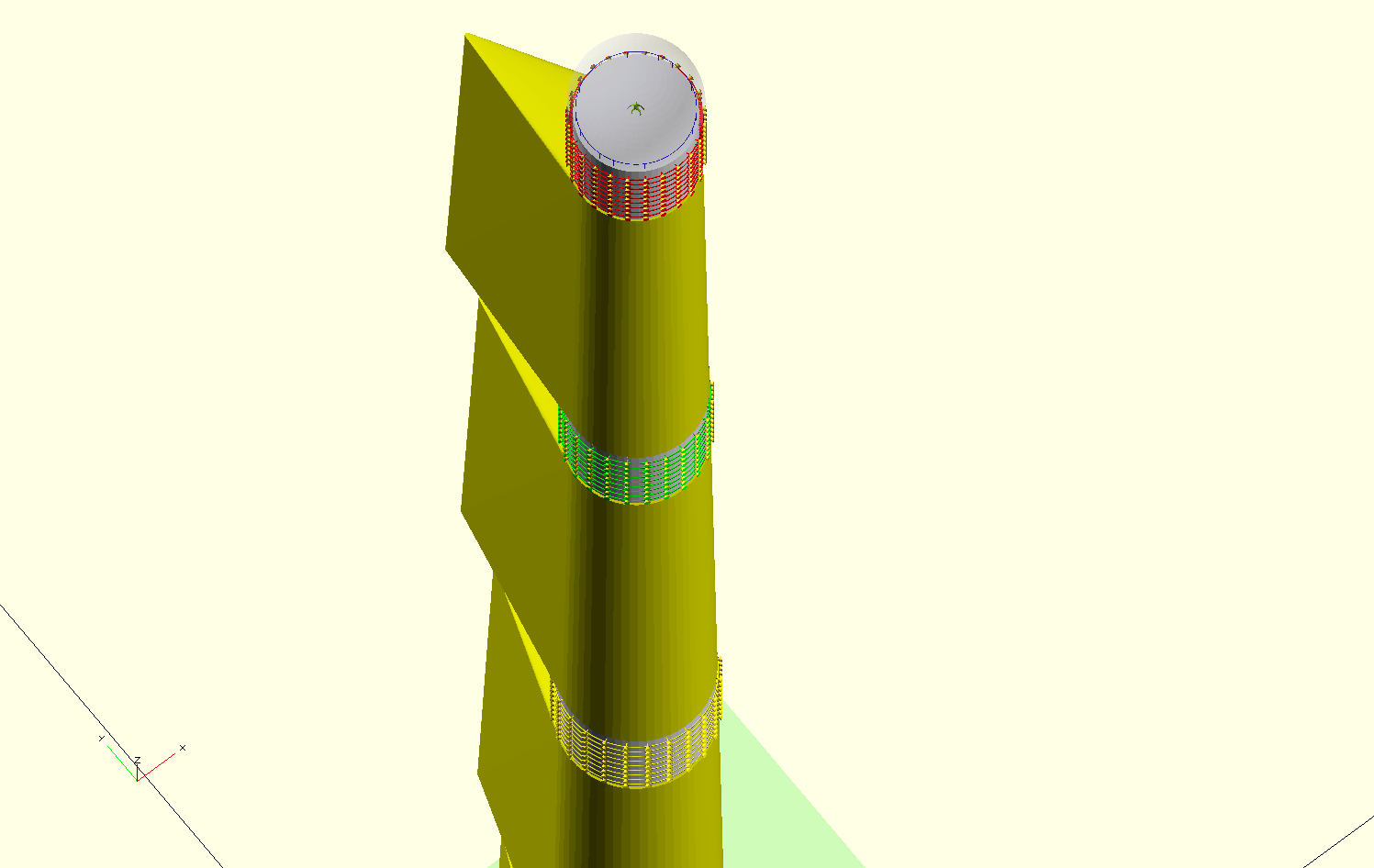
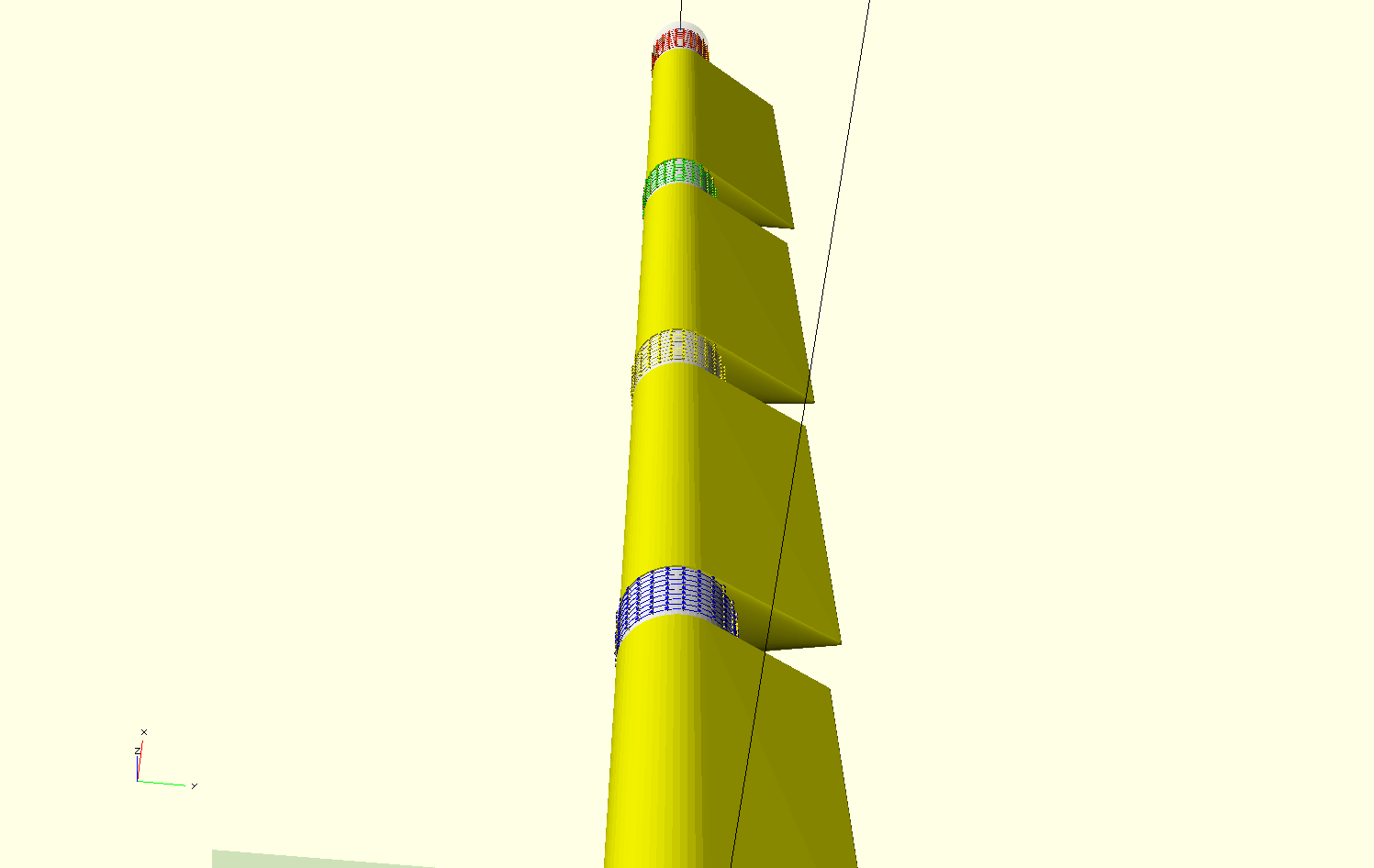
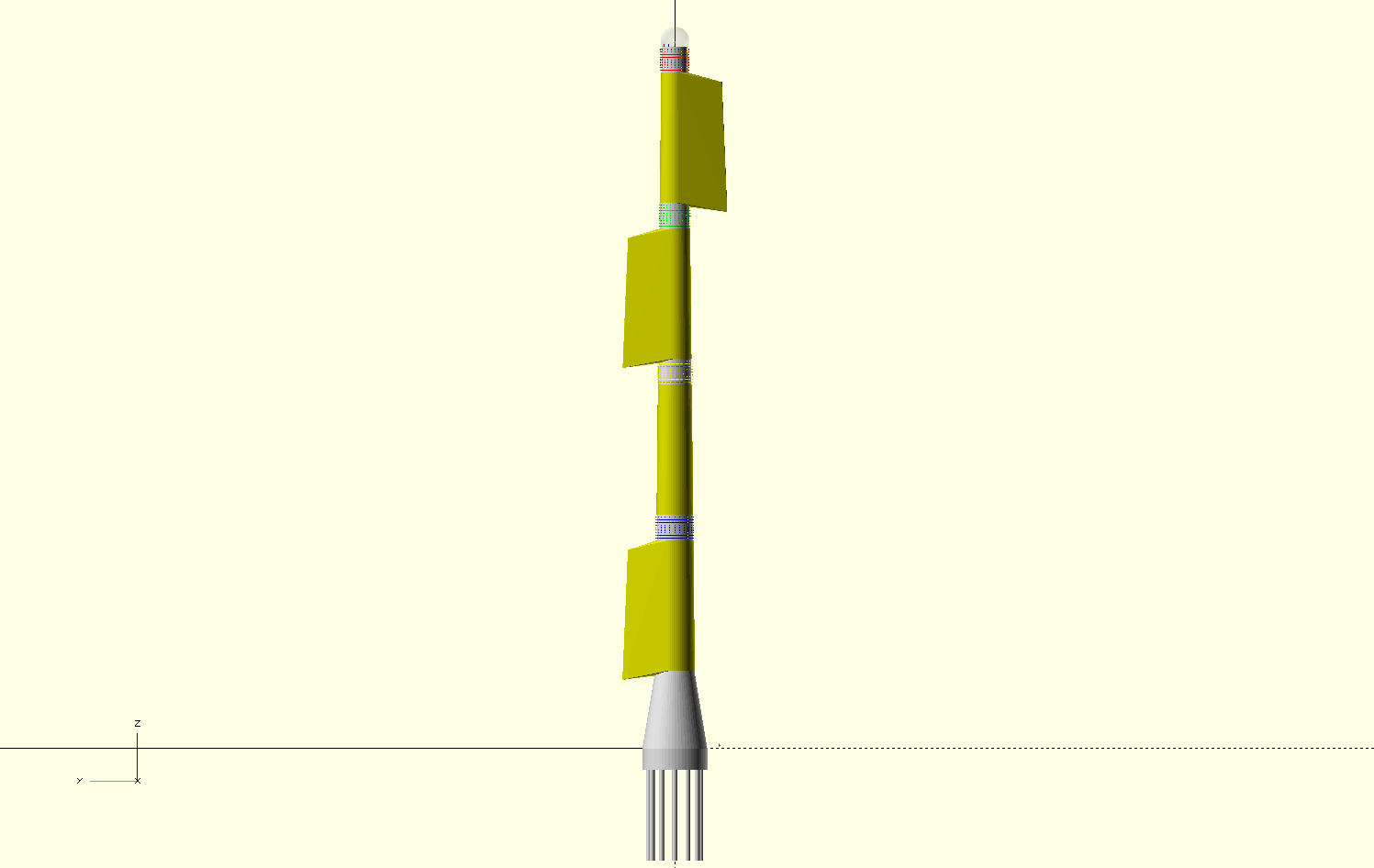
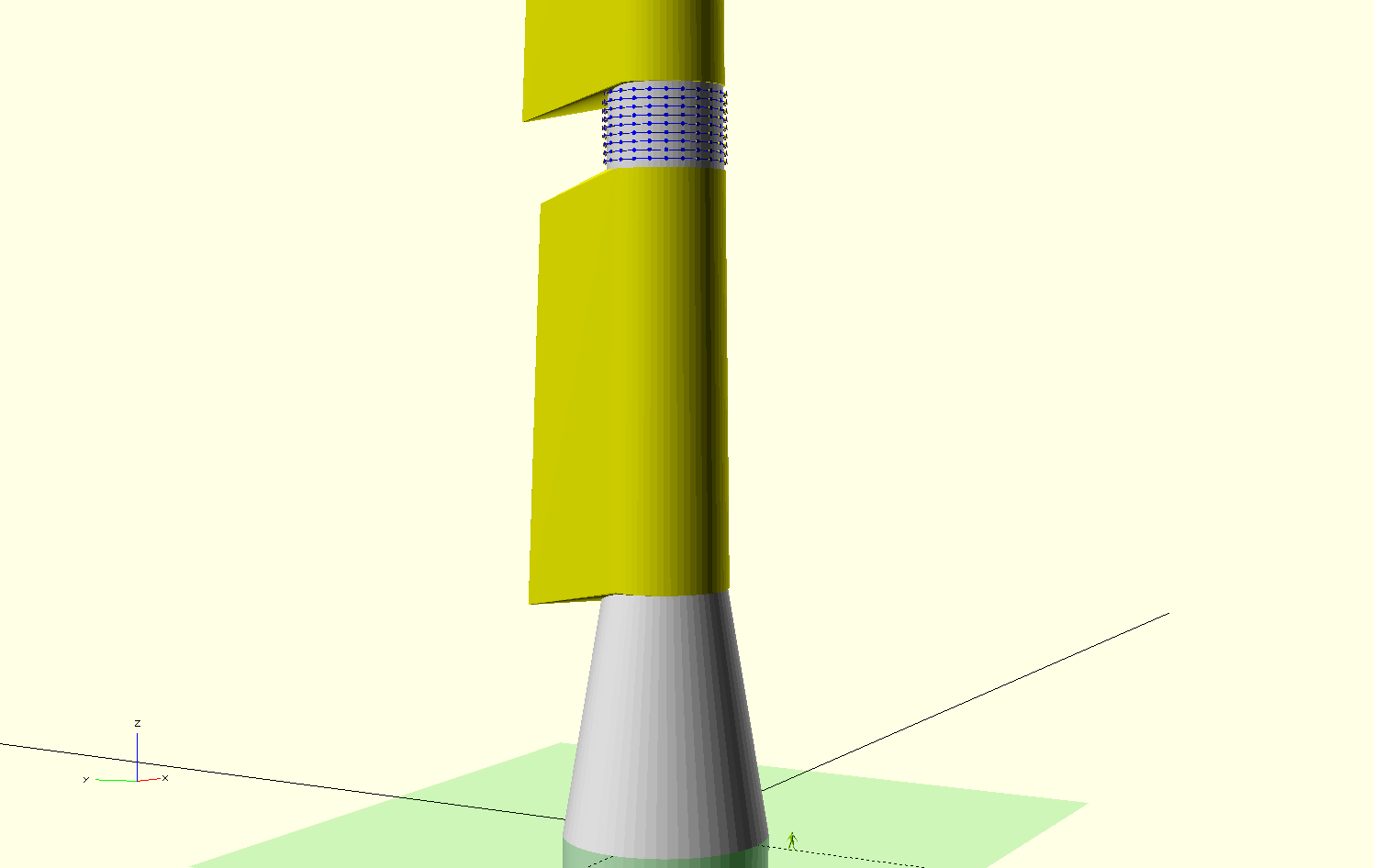
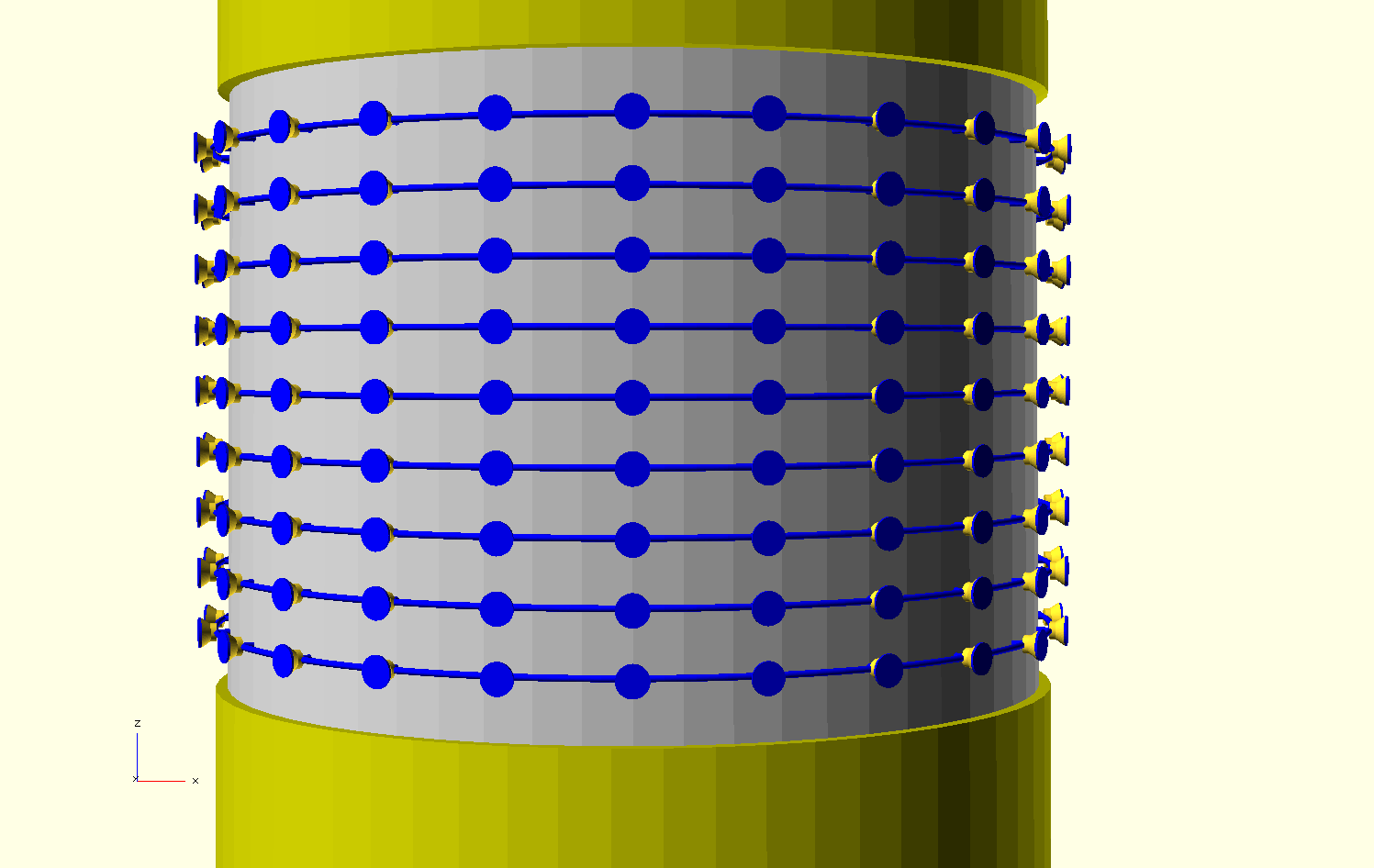
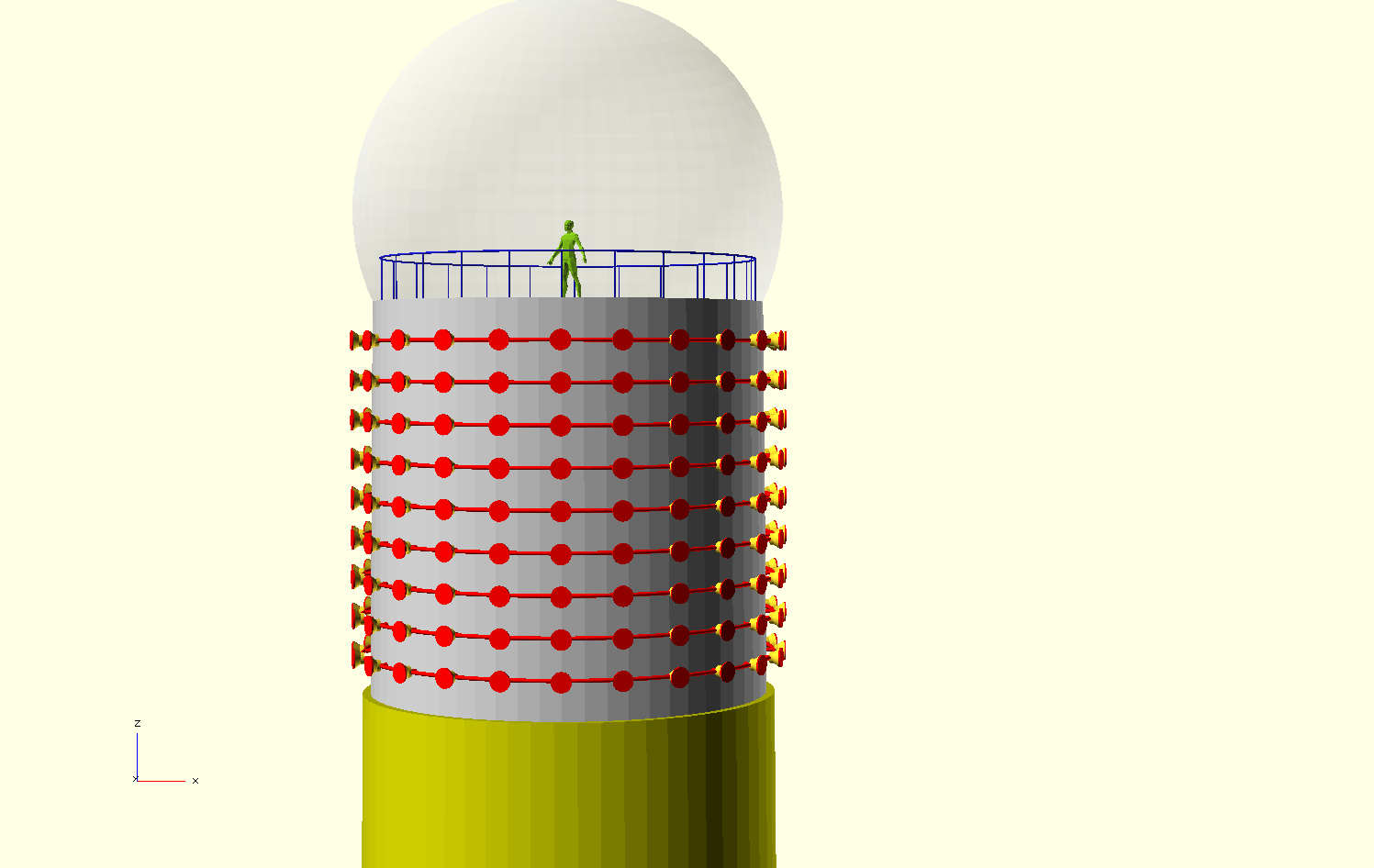
The tower will be a 4‑bit model. Each bit will consist of an omnidirectional super‑LED made of 9 rings of 24 LED luminaires (216 luminaires per bit). The bit of value 2^0 = 1 will be at elevation +265 and will be red. The bit of value 2^1 = 2 will be 60 metres lower, at elevation +205 and will be green. The bit of value 2^2 = 4 will be at elevation +145 and will be yellow. The bit of value 2^3 = 8 will be 60 metres lower, at elevation +85 and will be blue. The interpretation and reading of binary numbers is explained in the general article on the Optical Tower.
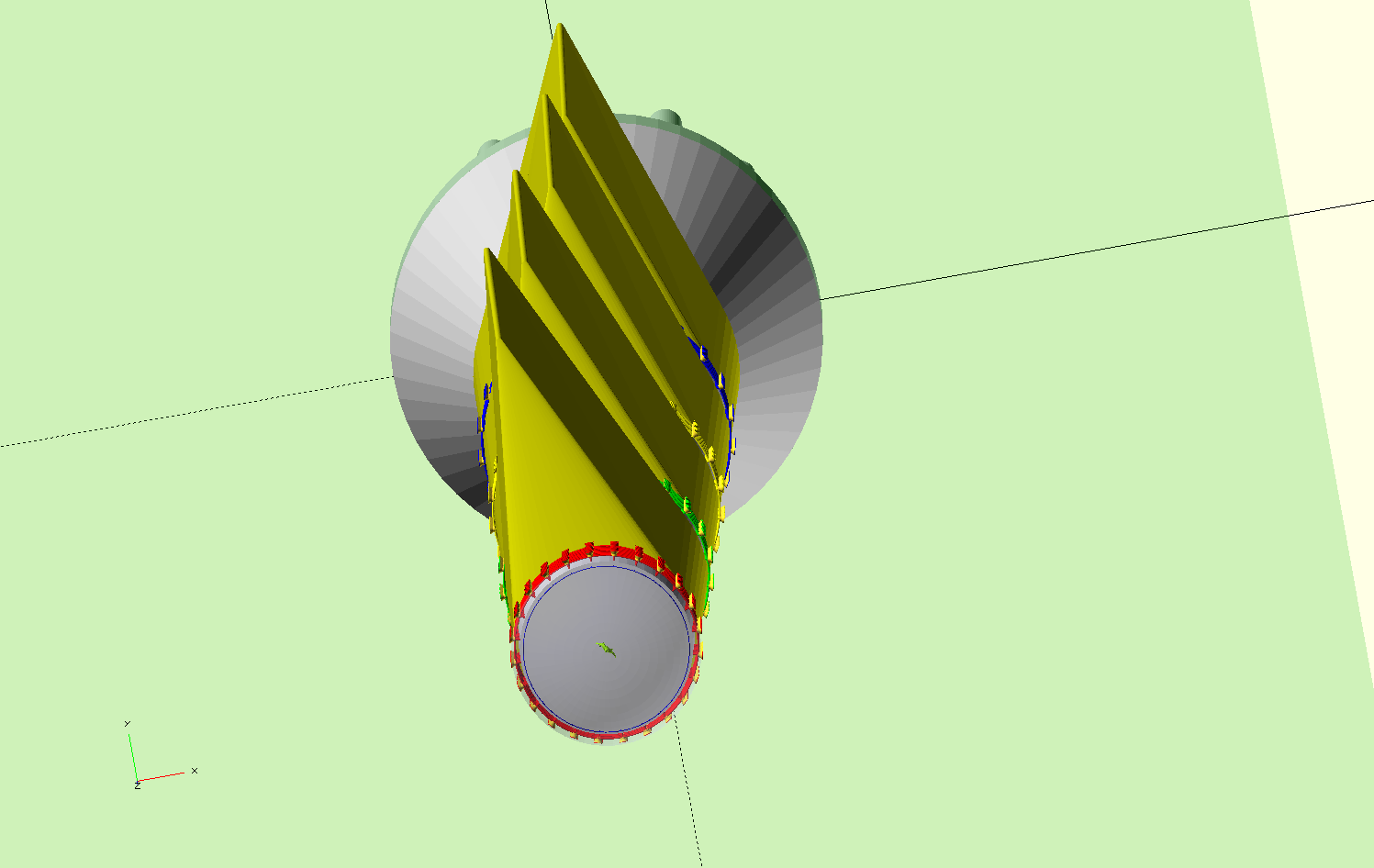
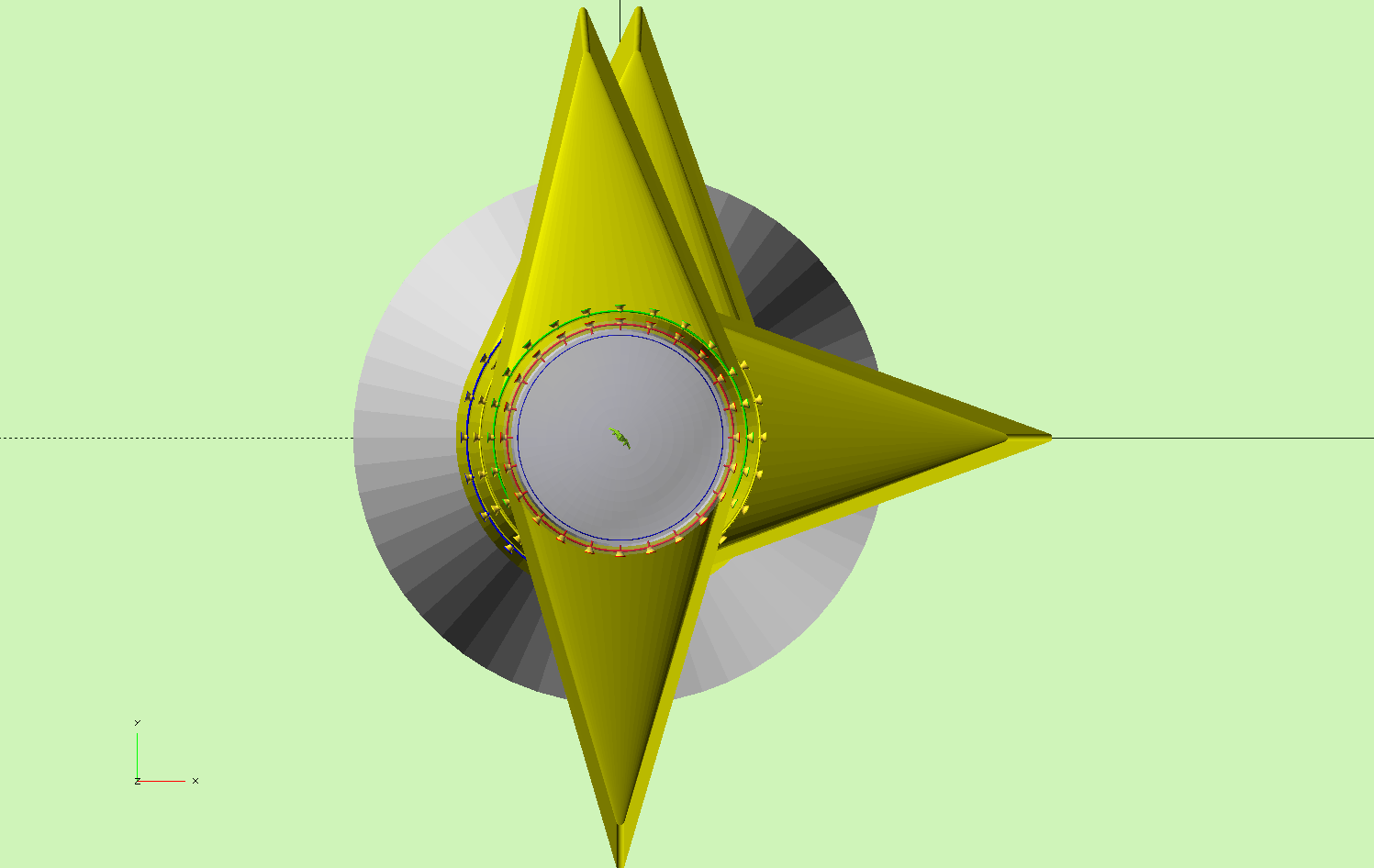
Between each set of luminaires a fairing made of aluminium or composite materials will be placed, shaped like a vertical wing 50 m long with a symmetrical profile, which will rotate freely around the tower axis and will always be oriented to the prevailing wind. With this fairing it is expected to reduce the aerodynamic drag coefficient of the circular cross‑section shaft from 1.1 to 0.3 or less. The effects of wind gradient in intensity and direction, as well as turbulence effects, will need to be studied.
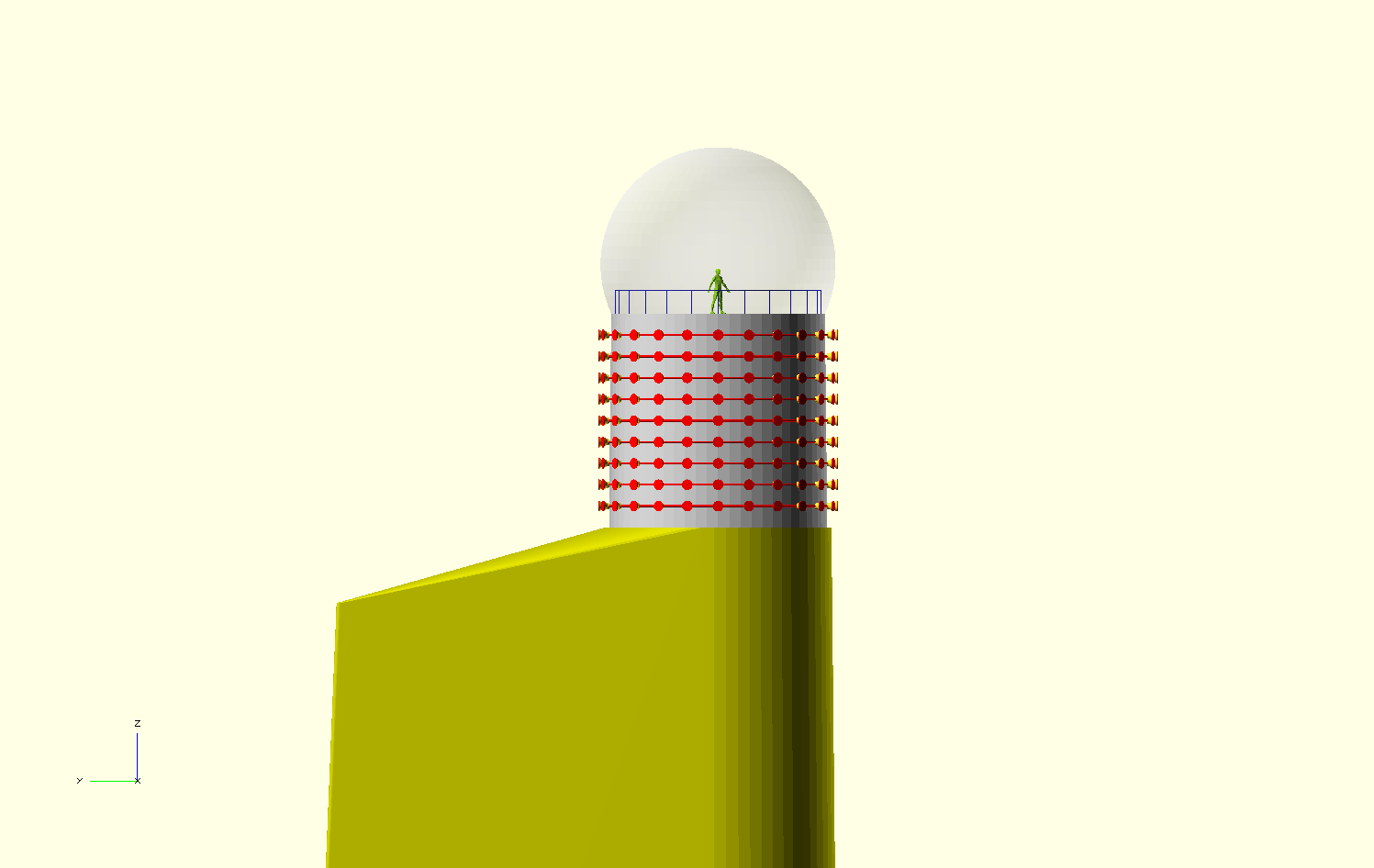
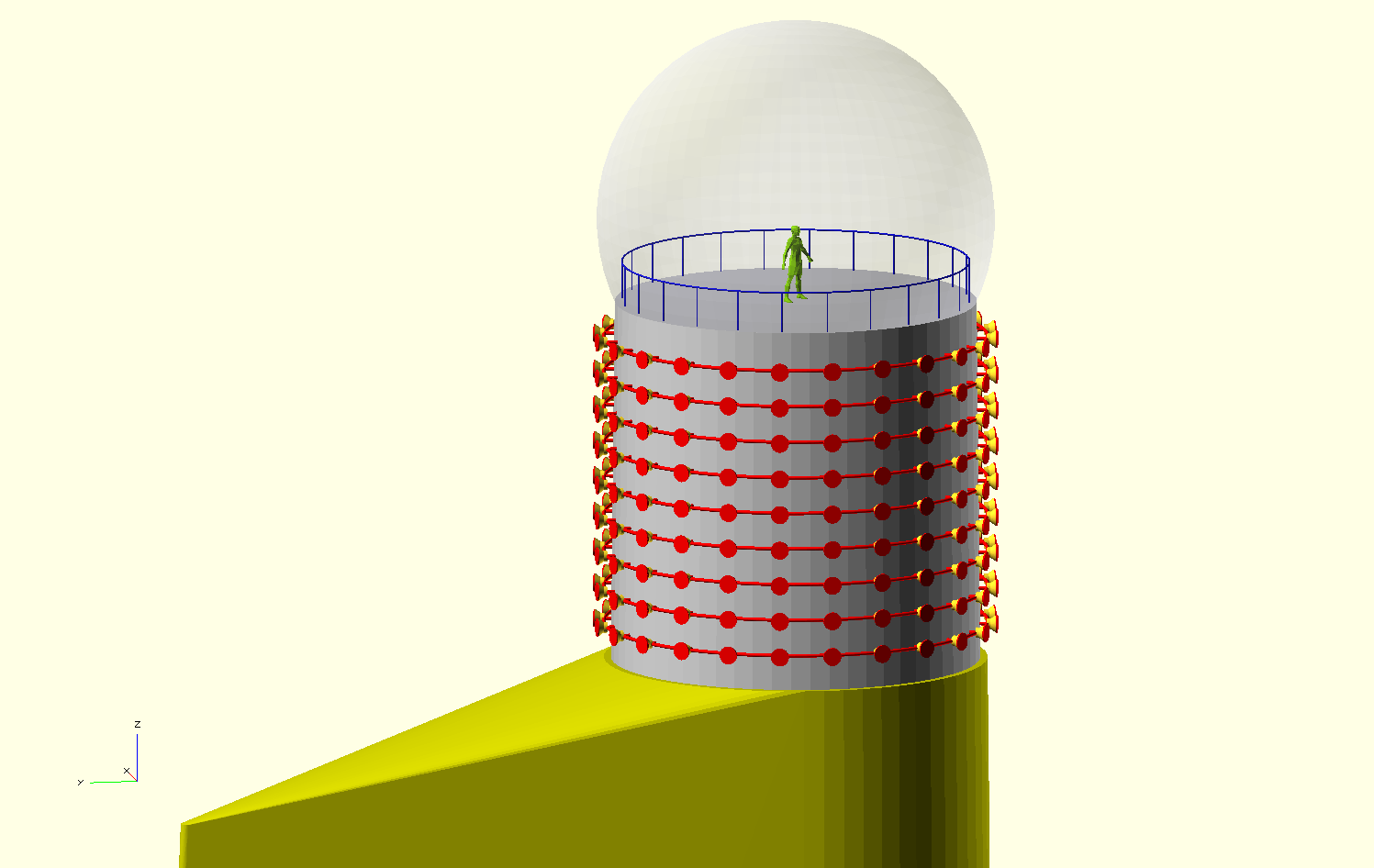
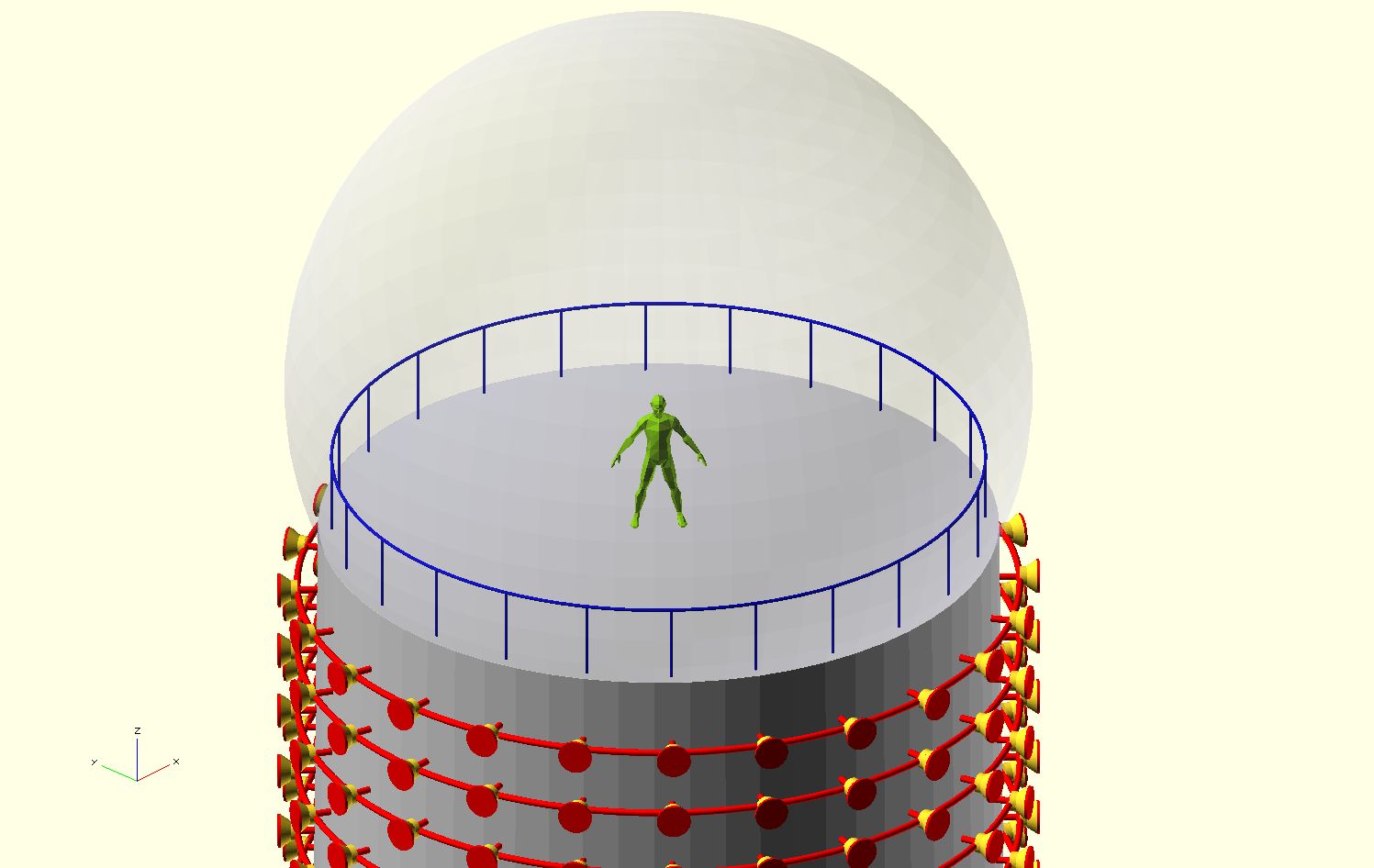
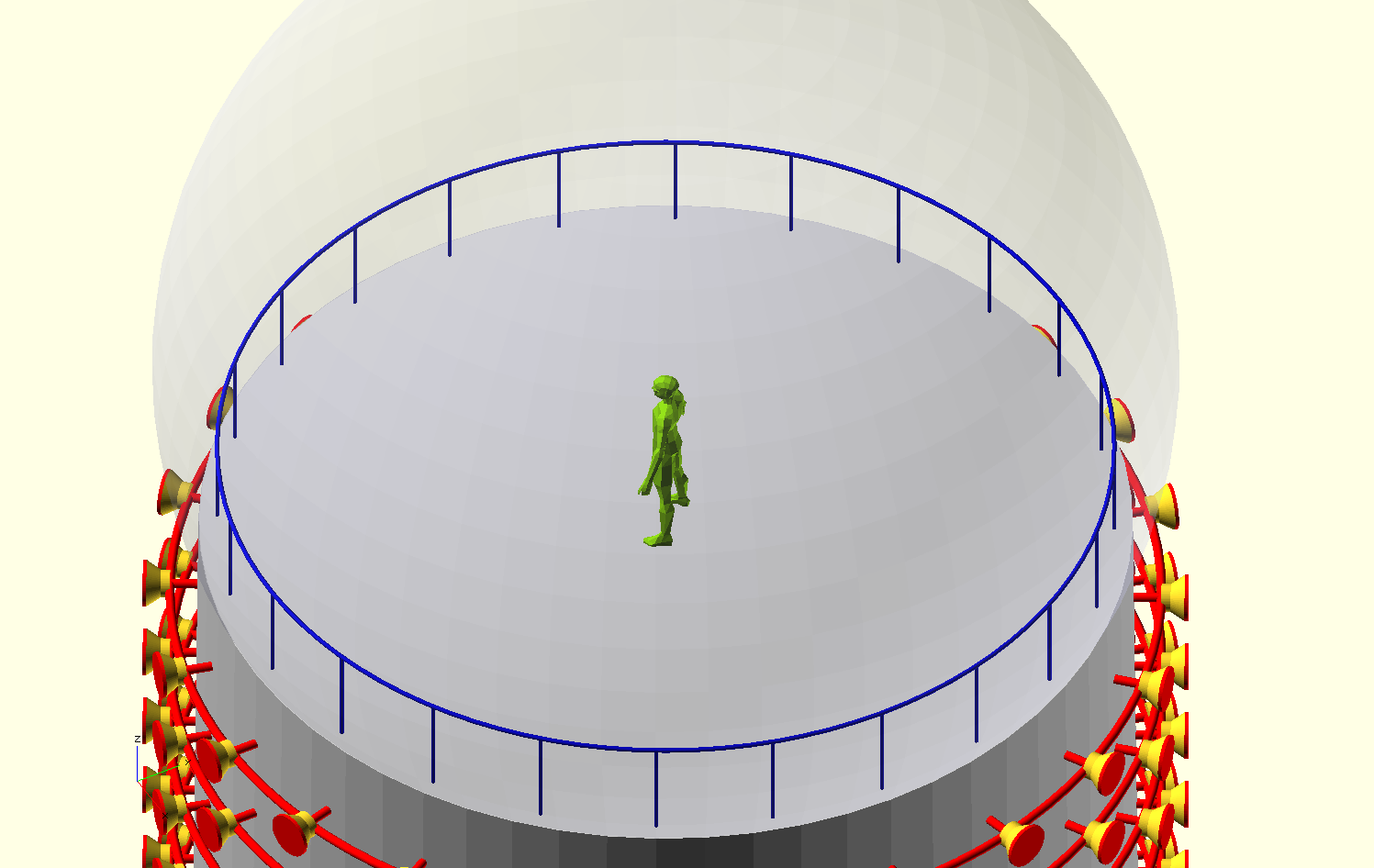
At elevation +270 m there will be a panoramic observatory under a transparent dome, accessible by the internal lift.
2. OpenSCAD model of the 270 m Joukovsky Tower
I have modelled the 270 m Joukovsky Tower using OpenSCAD software, which allows drawing geometric elements with relatively simple programming instructions. The source code of the model can be downloaded here together with an auxiliary .stl model.
3. Some images of the Joukovsky Tower model
 i001
|
 i002
|
 i003
|
 i004
|
 i005
|
 i006
|
 i007
|
 i008
|
 i011
|
 i012
|
 i013
|
 i014
|
 i015
|
 i016
|
 i017
|
 i018
|
 i019
|
 i020
|
 i021
|
 i022
|
 i023
|
 i024
|
 i029
|
 i030
|